The turtle's beat provides ample protection for its frail torso within. Whether the turtle is in a tank or in the wild, potent shells are a must for a salubrious turtle. If you notice your turtle's shell is soft, your turtle is probable unhealthy and needs attention right away.
Nearly likely, your turtle's shell is soft because it has metabolic os disease. Metabolic bone illness is often caused by poor nutrition or poor lighting, both of which foreclose the turtle from properly absorbing calcium within the blood. Without calcium, turtles develop metabolic os affliction, leading to a soft shell. A bacterial infection could be to arraign as well.
To find out more most why your turtle'southward beat out is soft, as well as tips for what to exercise nigh information technology, keep reading. In this commodity, we fully explained the five nearly mutual reasons for a soft turtle shell, metabolic bone illness, and more. Let's go started.
What Is Metabolic Bone Disease?
As we learned higher up, metabolic bone disease is the most common reason for a turtle with a soft shell. What exactly is this illness, though?
Metabolic bone illness is whenever the turtle'south skeletal construction, carapace, and plastron are weakened because of a calcium and phosphorus imbalance. Calcium is highly important to many creatures, but peculiarly turtles. It acts as a biochemical messenger that performs in many pathways and transmissions.
Without the proper amount of calcium, your turtle's shell and skeletal system will probable be soft. Additionally, the turtle's muscles can accept difficulty contracting, including in the middle. Turtles will too accept the disability to form claret clots.
Turtles are merely one animal that tin feel metabolic os disease. About all reptiles are specially prone to developing this disease and require additional calcium to remain healthy.
5 Reasons Your Turtle's Crush Is Soft
1. It is a infant.
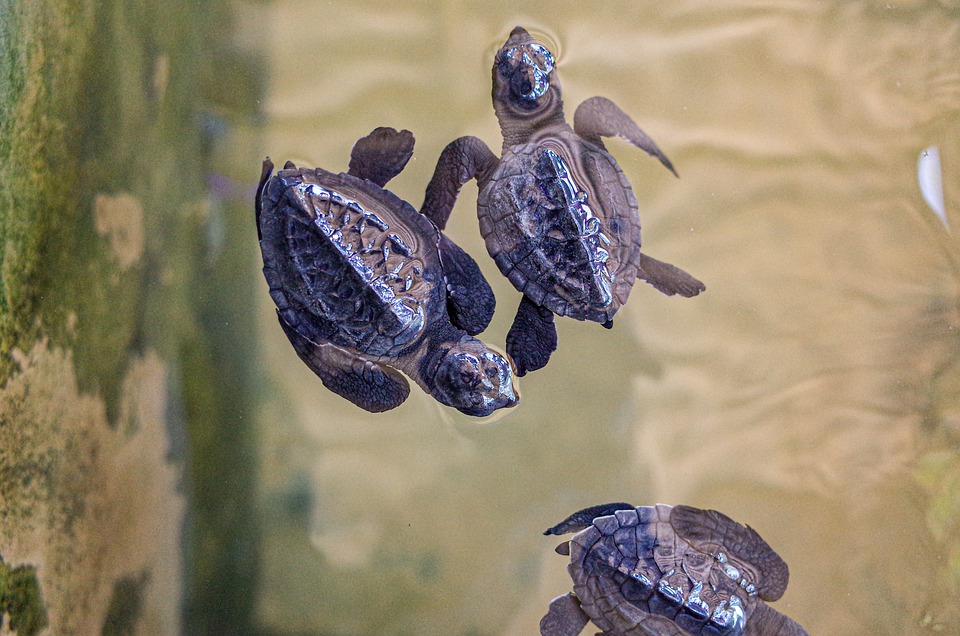
Many turtles are born with a shell that is relatively soft. This is completely normal, but y'all must take extreme circumspection when holding a immature turtle. Most turtles won't fully develop their shell until they have been alive for months, if non years.
If your turtle is a baby or very young and has a soft beat, there is nothing wrong with this turtle. Proceed taking intendance of your turtle as you have been, and brand sure to provide the turtle with ample nutrition, lighting, and clean environments to proceed growing a hard crush.
Image Credit: Pixabay
two. Calcium deficiency.
Once turtles have fully developed their hard shell, the vanquish should stay that mode until well after their death. If you notice your adult turtle's shell is becoming soft, it means that there is an issue with your turtle'southward health. Well-nigh likely, your turtle is experiencing calcium deficiency, potentially leading to metabolic bone disease.
Metabolic os disease is often caused past lack of materials, specially calcium, in your turtle'south bloodstream. Fifty-fifty if you feed your turtle pellets that contain calcium, your turtle may not exist getting enough. You can supplement more calcium into your turtle's nutrition to ensure your turtle is getting plenty to retain its difficult shell.
iii. The tank has poor lighting.
Lighting plays a huge part in your turtle's health. In the wild, turtles take abundant exposure to UVB light. Whenever turtles are kept inside, they admittedly demand a UVB light to ensure there crush remains difficult and healthy. Lack of UVB lighting is likely to blame if the turtle's soft beat is accompanied past a white residue.
Additionally, yous have to add basking spots for your turtle. Basking lights let turtles to dry and absorb D3. Without a basking spot, your turtle can have nutritional deficiencies, which leads to metabolic bone disease, as we accept already learned.
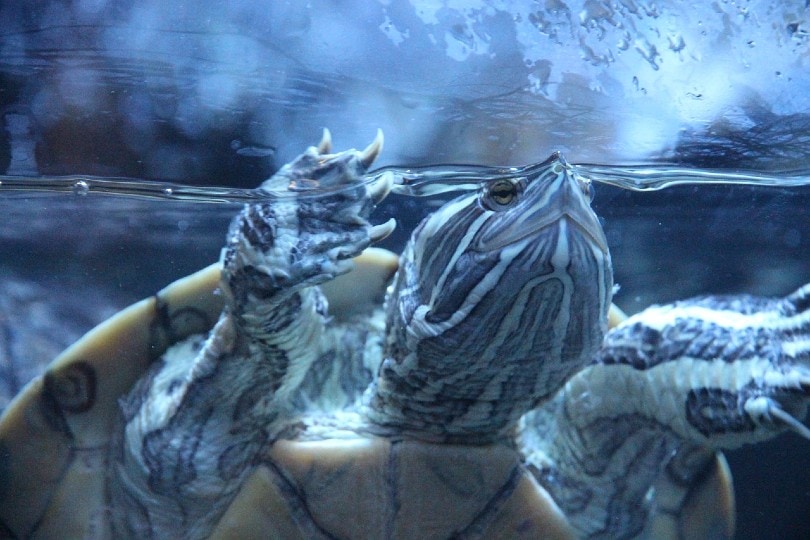
Image Credit: zoosnow, Pixabay
iv. The water temperature is likewise depression.
Water temperature plays a huge office in your turtle's health. Turtle tank water should be betwixt 75 and 86 degrees Fahrenheit. The air should be about ten degrees higher. Keep a thermostat within the tank to monitor its temperatures.
5. It has an infection.
Finally, the final potential reason that your turtle has a soft crush is that it has some sort of an infection. Oft, bacterial infections that go untreated weaken and damage the shell, as well as wreak havoc on other parts of your turtle's body.
What To Practice If Your Turtle Has a Soft Shell
Because a hard crush is required for your turtle to remain happy and healthy, you need to act quickly if you lot discover its shell becoming soft. Here is what you should exercise if your turtle has a soft vanquish:
Decide the Cause
The outset thing you demand to do if your turtle has a soft shell is to determine the cause. If your turtle is a babe, that is probable the cause, and y'all don't have much to worry about. For an adult, check the lighting system and temperature. If either of those issues are off-rest or not suitable for turtles, accost them accordingly.
Supplement More Calcium
If lighting and temperature is not to arraign for your turtle's soft beat out, diet and nutritional deficiency probable is. Supplement more calcium into your turtle's diet. Even if the temperature or low-cal within the tank was to blame, supplementing more calcium into the diet will help your turtle get dorsum on rail quicker. Y'all may want to go along feeding your turtle more calcium even subsequently the shell is healed.
Become Antibiotics
Although metabolic bone disease is more likely to arraign for a soft vanquish, we learned that bacterial infections can also cause a soft shell. If in that location are no other signs of metabolic bone disease and the soft shell is accompanied with oddly colored patterns, see your vet to become antibiotics to care for the bacterial infection.
When To See a Vet
If your turtle has a soft shell and fixing the tank and supplementing more calcium does non work afterward a few days, contact your vet. In the case that the soft shell is a visitor by rapid weight loss, accept your turtle to the vet immediately.
Final Thoughts
Unless your turtle is a baby, you should be alarmed if you notice your turtle has a soft shell. Well-nigh likely, your turtle is experiencing some class of metabolic bone disease as a side upshot of poor diet, poor lighting, or poor temperature. The soft shell could also be caused past a bacterial infection.
In all of these cases, y'all need to take extra care of your turtle. Supplement calcium into its diet and take your turtle to the vet if necessary. If yous don't act fast, the harm could be irreversible or worse – fatal.
Side by side on your reading list:
Practice Turtles Shed?
Can a Turtle Live Without Its Shell? What Y'all Demand to Know!


0 Response to "How Long Is a Baby Tortoises Shell Soft"
Post a Comment